
State Representatives Passes $2.01 Million in the House.
State Representative Marty Murray proudly announces that the Missouri House of Representatives has passed its budget, advancing it to the Senate for further consideration.
Through strategic negotiations and steadfast advocacy, Rep. Murray has secured over $2 million in targeted community investments that will directly benefit the 78th District and the broader St. Louis region.
Rep. Murray successfully negotiated $500,000 for the non-profit organization Doorways, providing critical funding that will support housing and supportive services for individuals living with HIV/AIDS, stabilizing lives and reducing health disparities in vulnerable communities. Through championing Murray assisted with $750,000 for Places for People (HCS HB 19.280): Supports planning, design, and renovation of a behavioral health and substance use treatment clinic, expanding access to critical mental health care services in St. Louis.
Additionally, Rep. Murray secured several key amendments through the House Budget Committee, including:
- $100,000 for Viking Advantage (HCS 3.205): Supports first-generation and low-income students in their transition to college, increasing access to higher education and long-term economic mobility.
- $60,000 for the Ritenour Food Pantry(HCS 6.022): Addresses urgent food insecurity needs for families in the Ritenour School District, ensuring students and community members have access to nutritious meals.
- $100,000 for a Statewide Doula Registry (HCS 10.780): Expands access to certified doulas, promoting maternal health equity, particularly for Black and brown mothers who face higher rates of maternal mortality and negative birth outcomes.
- $250,000 for All Hands on Deck (HCS 11.290): Supports a reentry initiative providing job training, mentorship, and wraparound services to returning citizens, reducing recidivism and strengthening public safety.
- $250,000 for LIV Sober Living and Recovery Services (HCS:8.066): Provides essential support for individuals recovering from substance use, ensuring stable housing and community-based recovery programs to help maintain sobriety.
House panel passes $47.9 billion state budget for FY 2026
The House Budget Committee on March 24 approved a $47.9 billion state operating budget for the upcoming fiscal year that includes about $2.1 billion less in spending authority than Republican Gov. Mike Kehoe requested when he presented his FY 2026 budget plan to lawmakers in January. The full House of Representatives is expected to begin debating the various appropriations bills that make up the state budget on April 1.
While it has been standard in recent years for the House to substantially trim the governor’s budget request, the Senate typically restores much of that funding, with the Senate position tending to prevail in final budget negotiations in most instances. Last year was an exception, however, as lawmakers were pressed up against the constitutional deadline for finishing the budget and skipped final stages of the process to largely stick with House position.
However, doing so resulted in a grossly underfunded FY 2025 state budget that fell well short of covering expected expenses. As a result, lawmakers passed a nearly $2 billion supplemental appropriations bill last month to ensure the state would have sufficient spending authority to complete the current fiscal year, which ends June 30.
A key point of partisan disagreement in the proposed FY 2026 budget concerns state support for local public school districts. Over Democratic objections, House Republicans are adhering to Kehoe’s budget request, which falls $300 million short of providing what constitutes “full funding” of K-12 schools under state law. But the Senate Appropriations Committee chairman, also a Republican, has indicated he intends to provide the full funding amount in order to keep promises to bolster public education spending made last year in exchange for passage of legislation expanding a state private school voucher program.
The state’s voucher program, originally enacted in 2021, currently is funded by private donations, in exchange for which the donors receive a credit against their state income tax liability equal to the amount of their contribution. The law is structured this way in an attempt to circumvent a state constitutional prohibition against the legislature providing direct public funding to private individuals or organizations.
Although state law imposes a $75 million annual cap on the amount of tax credits, the voucher program hasn’t come close to reaching that cap through private donations. As a result, Kehoe is proposing a $50 million direct appropriation of taxpayer money to support the program. However, such a direct appropriation likely would violate the state constitution. The House committee budget plan includes the direct funding for the voucher program.
Once the appropriation bills clear the House, the budget process will move to the Senate. Lawmakers must grant final approval to the bills by a constitutional deadline of 6 p.m. on May 9. The 2026 fiscal year begins July 1.
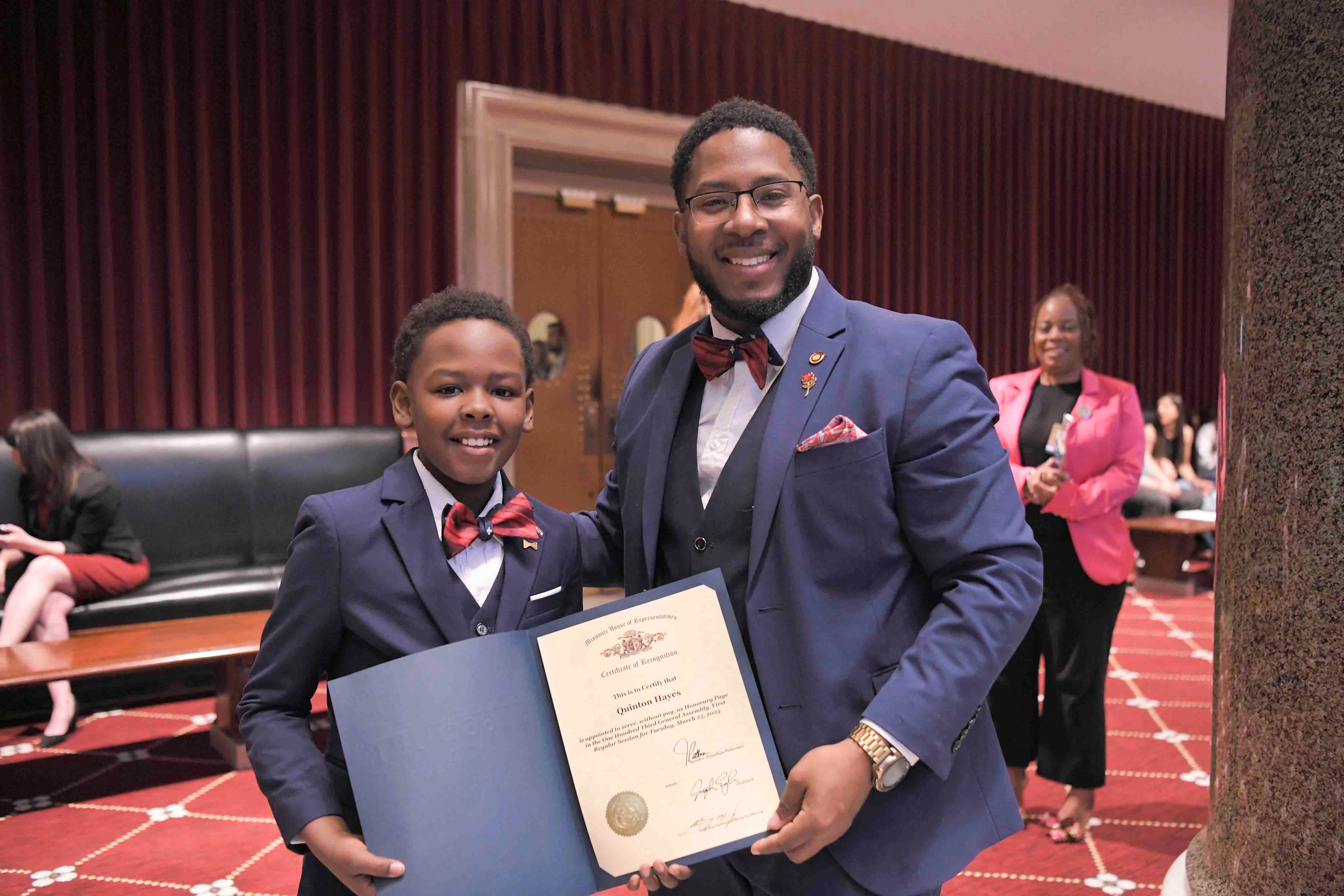


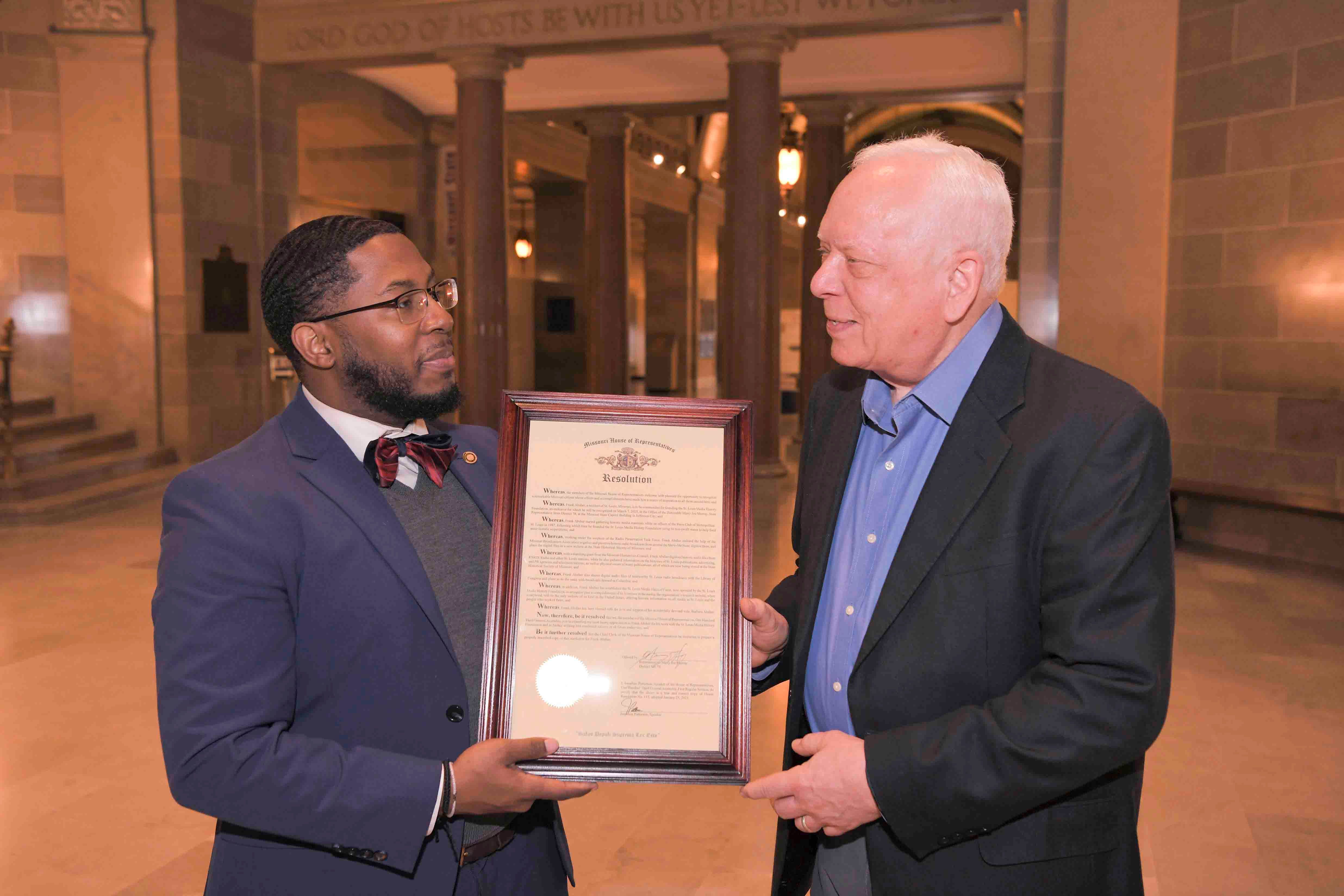
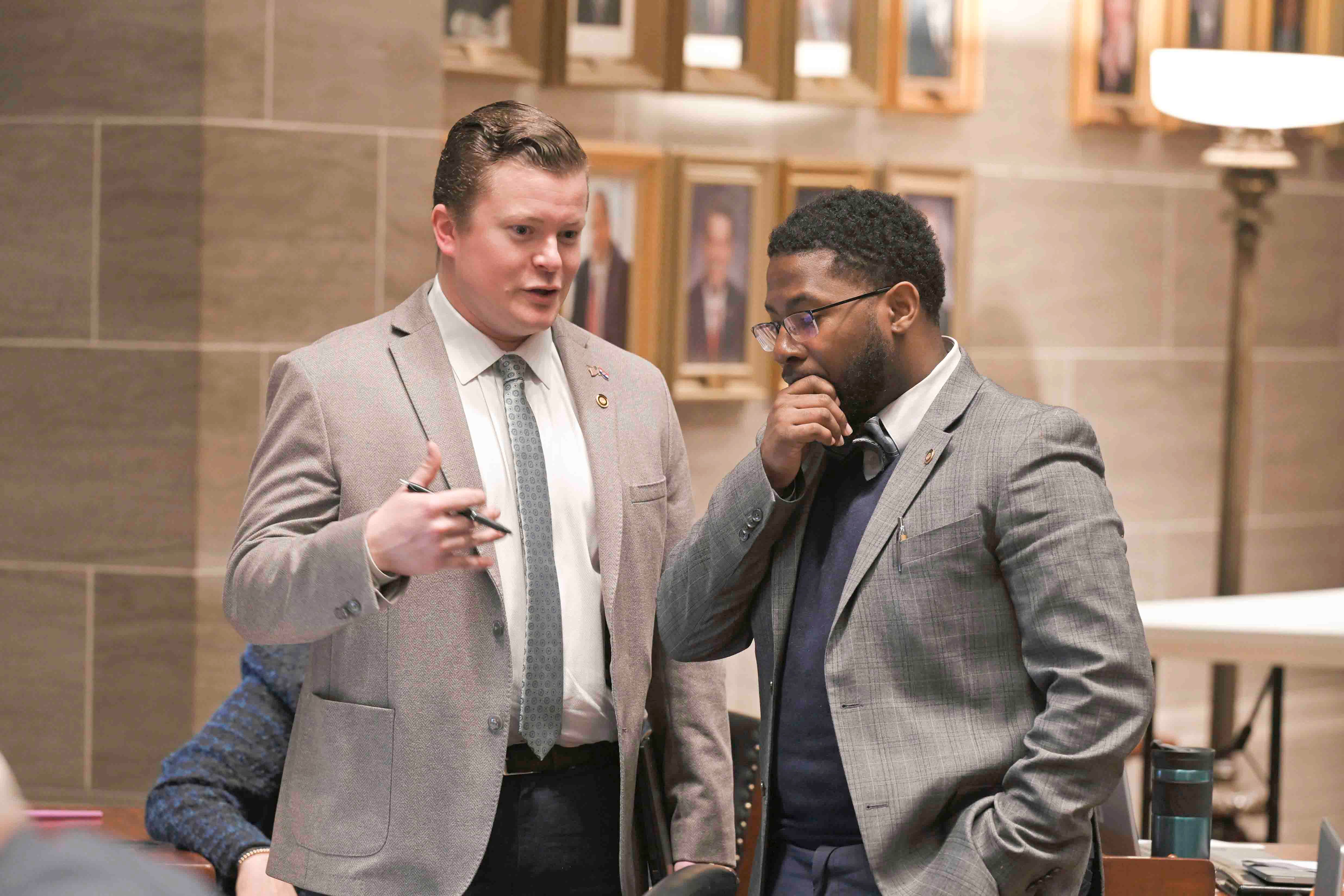
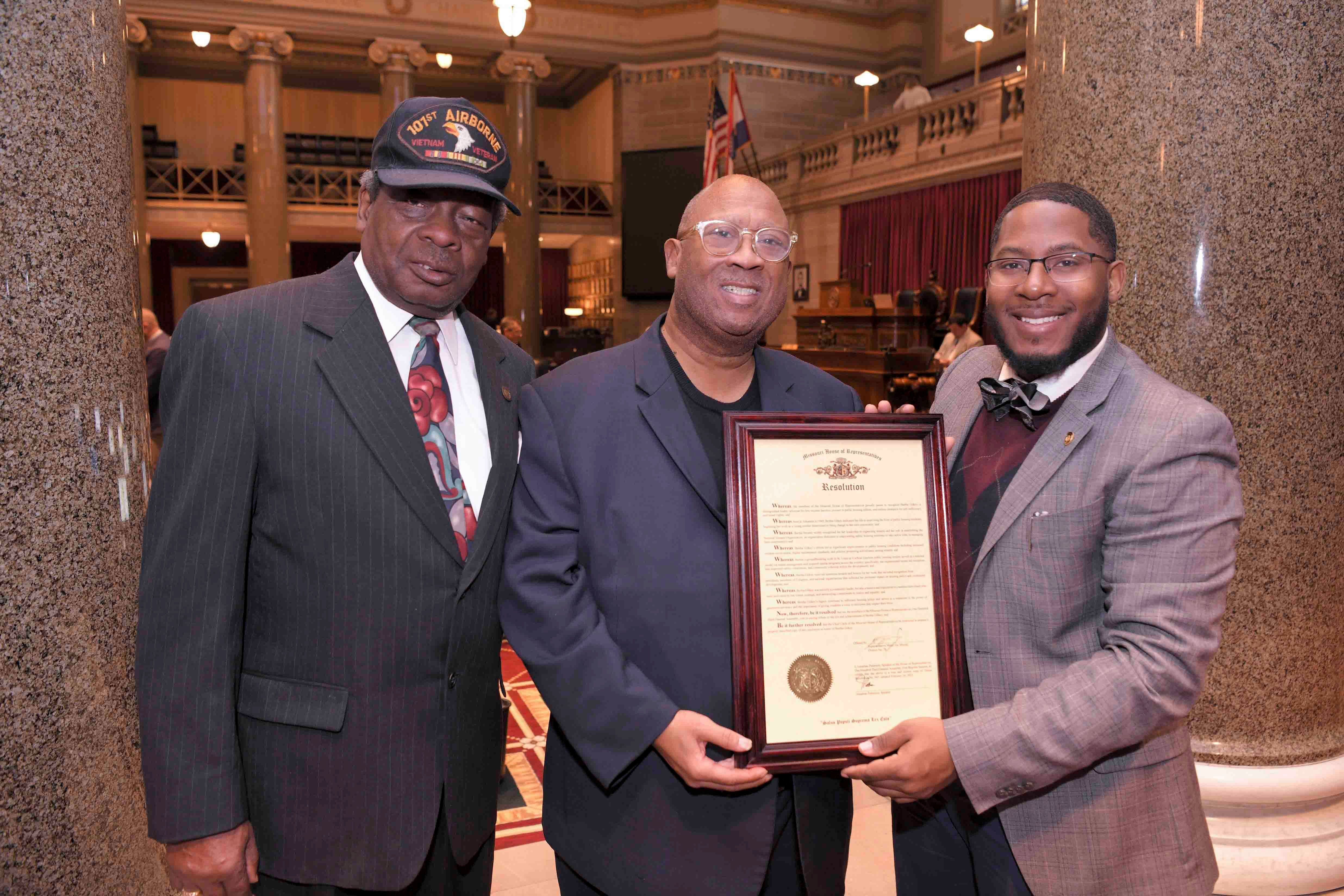



Rep. Marty Joe Murray Breaks Through Gridlock to Move Key Legislation
Despite serving in a super minority as a Democrat in the Missouri House, Rep. Marty Joe Murray has defied expectations and made notable progress moving impactful legislation—something rarely achieved from across the aisle. Through diligent relationship-building and a reputation for hard work, Murray has advanced several key measures with bipartisan support.
One major legislative success is HCS HBs 610 & 900 – The Revitalization of Downtowns and Main Streets Act. This bill, which aims to breathe new life into struggling urban and rural commercial districts, has been placed on the informal calendar and is poised for floor debate. The Senate companion bill is currently under House review and is scheduled for a vote in the Economic Development Committee on April 23.
Murray also championed a HB970 which regulates Video Lottery Terminals (VLTs), which passed out of the House. Notably, he passed a critical amendment requiring every VLT machine in the state to display gambling addiction warnings—ensuring public health remains a priority in the expansion of gaming.
In a further effort to protect Missouri families, Rep. Murray co-sponsored HB 707, a bill designed to combat financial fraud and abuse. He successfully passed an amendment that brings greater accountability to payroll processing services. Under his amendment, payment processors acting as agents for employers must adhere to clear legal guidelines—ensuring workers are paid accurately and on time, even if a payroll agent fails to remit the funds. The amendment ensures:
- A written agreement exists between the employer (payor) and agent.
- The agent is clearly presented as acting on behalf of the employer.
- The employer remains fully responsible for the funds owed to workers, regardless of the agent’s failure to process payments.
In the realm of public safety, Murray sponsored HB 901, a bill that strengthens protections for healthcare workers. This legislation forces the Department of Health & Human Services to create a public awareness campaign regarding the penalties for who threaten or assault healthcare professionals on the job—a growing concern across the country. HB 901 received a public hearing and was voted “do pass,” marking another key step in its journey toward becoming law.
With National Infertility Awareness Week approaching next week, Rep. Murray is also drawing attention to HCR 4, a resolution he filed to recognize the physical, emotional, and financial toll infertility takes on individuals and families. This is one of the most bi-partisan co-sponsored pieces of legislation from the 103rd General Assembly; with over 25+ sponsors. The resolution has been referred to the Children and Families Committee, where Murray hopes it will help spark broader conversations and policy responses to support reproductive health.
In a polarized environment, Rep. Murray’s ability to move meaningful legislation showcases a refreshing model of effective, principled leadership.
House GOP votes in favor of repealing reproductive rights
The Republican-controlled Missouri House of Representatives on April 17 voted 103-51 in favor of a proposed constitutional amendment to completely repeal the new constitutional protections for reproductive rights that voters recently approved and instead ban abortion in most circumstances. House Speaker Jon Patterson, a physician, was the lone Republican to join unanimous Democrats in opposing the measure, which now advances to the Senate.
Under Amendment 3, which Missouri voters just ratified in November, abortion rights are protected up to the point of fetal viability – usually around 24 weeks of pregnancy. Legal restrictions are allowed after that point, except when a medical professional deems an abortion necessary to “protect the life or physical or mental health of the pregnant person.”
House Joint Resolution 73 broadly bans abortion, with narrow exceptions for ill-defined “medical emergencies” and cases of rape or incest. However, abortions involving the latter two categories are only allowed during the first 12 weeks of gestation.
Despite deleting Amendment 3 from the Missouri Constitution in its entirety, including protections for access to contraception and other forms of reproductive care, the ballot language Republican lawmakers wrote for HJR 73 makes no mention of that fact and instead deceptively claims it would “guarantee access to care for medical emergencies, ectopic pregnancies and miscarriages,” access to all of which is already guaranteed by Amendment 3.
The ballot language also says it would “protect children from gender transition,” referring to a provision of HJR 73 that would constitutionally prohibit gender-affirming care for minors. That provision is unrelated to the measure’s primary purpose of eliminating abortion rights but was added as so-called “ballot candy” intended to appeal to voters.
Democrats are expected to filibuster HJR 73 when it comes up for Senate debate. But if it does clear the upper chamber, it automatically would go on the November 2026 statewide ballot for voter consideration, unless the governor exercised his constitutional authority to set an earlier election date.
Kehoe signs state takeover of St. Louis police into law
The St. Louis Metropolitan Police Department is back under the state government control after Missouri Gov. Mike Kehoe signed legislation into law on March 26 ending a brief period of local oversight of the agency. Because the bill contained an emergency clause, it took effect immediately instead of the usual Aug. 28 effective date for new laws.

Kehoe, a Republican, had made a state takeover of the department a top priority for his first year in office. The state previously seized control of the St. Louis police at the outset of the Civil War in 1861 as Missouri’s pro-secession governor and state legislature sought to limit the power of pro-Union city officials and suppress the city’s Black population. Missouri voters finally restored local control over the department with the passage of a 2012 statewide ballot measure.
Under House Bill 495, a board of five voting members will run the department. The governor will appoint four of those members, who must be city residents, with the St. Louis mayor holding the final spot. The governor will also pick a sixth, non-voting member who can be a St. Louis County resident, provided that the person owns property in the city. Kehoe has 90 days to appoint the new Board of Police Commissions.
As with the previous state control of the St. Louis police and the continuing state control of the Kansas City police, local taxpayers will remain fully responsible for funding the police department but have no say over how it operates.
HB 495 supporters point to the city’s crime rate and continuing loss of population as reasons for putting the police department back under state oversight. The bill’s detractors note there were several periods under state control when crime in the city was much worse than it is today. They also point to the fact that the city’s population decline began 60 years ago and has continued ever since, while local authorities had only been in charge of the department for the last dozen years.
HB 495 also includes numerous other provisions loosely relating to public safety. Those provisions include prohibiting stunt driving on public roads, cracking down on organized retail theft, requiring law enforcement agencies to report the immigration status of criminal offenders, banning the use of restraints on pregnant prisoners in their third trimester and establishing the Missing and Murdered African-American Women and Girls Task Force.
House tries to resurrect unconstitutional gun nullification bill
The Missouri House of Representatives voted 100-51 on March 27 for legislation that attempts to resurrect a 2021 state law that declared many federal gun laws unenforceable in the state and prohibited local police from assisting with their enforcement. The 8th U.S. Circuit Court of Appeals ruled that law unconstitutional in August, agreeing with a lower court that it violates the U.S. Constitution’s Supremacy Clause, which holds federal law trumps contrary state laws.
While supporters of House Bill 1175, dubbed the Second Amendment Preservation Act, claim the new legislation has been modified from the 2021 version to withstand judicial scrutiny, it still purports to declare a litany of federal laws and regulations restricting firearms to be invalid in Missouri, which is precisely what the 8th Circuit said the state cannot do.
“The Supremacy Clause states that federal law is ‘the supreme Law of the Land, … any Thing in the Constitution or Laws of any State to the Contrary notwithstanding,’” Chief Judge Steven Colloton wrote in the appellate ruling. “The ‘Second Amendment Preservation Act’ states that certain federal laws are ‘invalid to this state,’ but a State cannot invalidate federal laws to itself. Missouri does not seriously contest these bedrock principles of our constitutional structure.”
HB 1175 also contains a “defund-the-police” provision authorizing those arrested or convicted of a federal gun crime to sue local police departments for civil fines of $50,000 per occurrence for assisting federal agents. In addition, it would prohibit local governments from hiring – in any capacity – former federal officers who previously enforced gun laws. These provisions were also included in the unconstitutional 2021 version of the legislation.
Only three Republicans joined unanimous Democrats in opposing HB 1175. The bill now advances the Senate.
House Republicans seek to stymie initiative petition process
The Republican-controlled House of Representatives voted 103-49 on March 27 along straight party lines to impose several new procedural restrictions designed to make it harder to put measures on the statewide ballot via the initiative petition process. However, the Missouri Supreme Court repeatedly has ruled the legislature has no authority enact statutory procedural hurdles that frustrate the constitutional right to the initiative.
House Bill 575 would require paid petition circulators to be U.S. citizens and either a Missouri resident or a resident of another state who has been present in Missouri for at least 30 consecutive days prior to gathering signatures. It also would specify the color of ink people must use to sign a petition, restrict the time period for courts to resolve ballot language challenges and limit who has legal standing to bring those challenges.
In addition, the bill would give the secretary of state and attorney general the authority to reject proposed petitions for allegedly failing to comply with constitutional requirements. That change was prompted by failed attempts by anti-abortion Republican officials to keep a constitutional amendment protecting reproductive rights off the 2024 statewide ballot. The Supreme Court rejected those efforts and voters ultimately ratified the amendment.
Majority Republicans in the legislature have been seeking to undermine the initiative process for several years after voters used it to enact a number of polices the GOP opposes, including legalizing marijuana, enacting legislative ethics reform and increasing the state minimum wage while also requiring employers to offer mandatory sick leave.
House advances anti-abortion messaging bill to Senate
The Missouri House of Representatives on March 27 approved anti-abortion messaging legislation that despite bearing an inflammatory moniker wouldn’t actually prohibit conduct that isn’t already illegal. The bill advanced to the Senate on a vote of 109-32, with nine lawmakers voting “present.”
House Bill 195 would establish the Born Alive Abortion Survivors Protection Act that purports to make it crime to intentionally kill a child after birth following a failed abortion. However, that is already considered murder under existing law.
The bill also would impose civil liability on medical providers who participated in allegedly faulty abortions. The legislation is part of Republican efforts during this legislative session to push the legal boundaries of permissible abortion restrictions after Missouri voters enshrined abortion rights in the state constitution last year.
Limits on judicial review of ballot questions sent to governor
The Missouri House of Representatives on April 14 voted 109-46 to grant final passage to legislation that would severely weaken the authority of Missouri courts to rewrite deceptive or misleading ballot language written by the General Assembly or the Secretary of State’s Office. The bill, which passed on straight party lines with majority Republicans in favor and Democrats opposed, now goes to Republican Gov. Mike Kehoe, who is expected to sign it into law.
Existing law empowers judges to rewrite ballot language for measures submitted to voters if the original language is challenged and ruled unfair or misleading. The secretary of state writes the original ballot language for all measures placed on the ballot via initiative petition and is the default author for ballot language on measures submitted to voters by the legislature. If they choose, however, lawmakers can write that ballot language themselves. Courts regularly strike down both legislatively crafted ballot questions and those prepared by the secretary of state.
Under Senate Bill 22, if a judge rejected ballot language written either by the legislature or the secretary of state, the judge would submit the matter to the secretary of state, who would have three tries to write a fair ballot question. Only if the secretary of state continued to provide unfair language after the third do-over attempt would a court then be authorized to rewrite the language.
SB 22 also contains a completely unrelated provision that would allow the attorney general to immediately appeal preliminary injunctions that block enforcement of state laws or constitutional provisions. Under existing law, the trial court must make a final ruling in a given case before it can be appealed in order to avoid unnecessary delays in the judicial process.
Supporters of this provision admitted it is aimed at allowing the immediate appeal of a preliminary injunction a Jackson County judge issued earlier this year blocking enforcement of several anti-abortion state laws that were rendered unconstitutional after Missouri voters added protections for reproductive rights to the state constitution late last year. That portion of SB 22 contains an emergency clause to allow it to take effect as soon as Kehoe signs it into law, instead of the usual Aug. 28 effective date for legislation.
House advances restoration of state’s presidential primary
The Missouri House of Representatives advanced elections legislation to the Senate on April 14 to restore the state’s presidential preference primary starting with the 2028 election cycle. The bill passed 85-64, with two members voting “present.”
While House Bill 126 as currently written also would extend the current two-week, no-excuse absentee voting period to six weeks before an election, its sponsor said he agreed to work with the Senate to change it back to two weeks as a condition for it to come up for a final House vote. The bill also contains a provision to prohibit public pension systems from making contributions in support of or opposition to any ballot measure.
The Republican-controlled General Assembly did away with its state-run presidential primary under omnibus elections’ legislation enacted in 2022. During the 2024 election cycle, Missouri Republicans reverted to the sparsely attended caucus system both parties used prior to 2000, while Democrats conducted a mail-in primary. Neither method worked particularly well, and leaders of both state parties urged lawmakers to restore the state-run primary.
However, several Republican lawmakers wanted to stick with the caucus system. As a result, the bill received just three more House votes than the minimum 82 required for passage.
House Approves guns on buses, lowering conceal-carry age
The Missouri House of Representatives sent legislation to the Senate on April 10 that would authorize conceal-carry permit holders to possess firearms while riding public transit, which currently is illegal under state law. The bill also would lower the minimum age for obtaining a concealed weapons permit from 19 to 18.
The House approved House Bill 328 on a largely party-line vote of 106-45, with two members voting “present.” Republicans uniformly supported the bill, while all but a couple Democrats opposed it. You can hear Rep. Murray’s debate here.
 Marty Joe Murray, Jr